
Invisible Man Series
The Invisible Man series explores what happens when soldiers become easier to see as symbols than as people. Using camouflage, restricted palettes, and environments that visually absorb the figures within them, A.LaB plays with the tension between visibility and erasure. The work reflects on the distance that can form between the public and the individuals asked to carry out wars, especially when conflict is reduced to headlines, statistics, or political argument. Rather than glorifying combat, the series asks viewers to look past the uniform and reconsider the humanity of the person inside it. At its core, Invisible Man is about the danger of allowing anyone to disappear into the role they have been assigned.
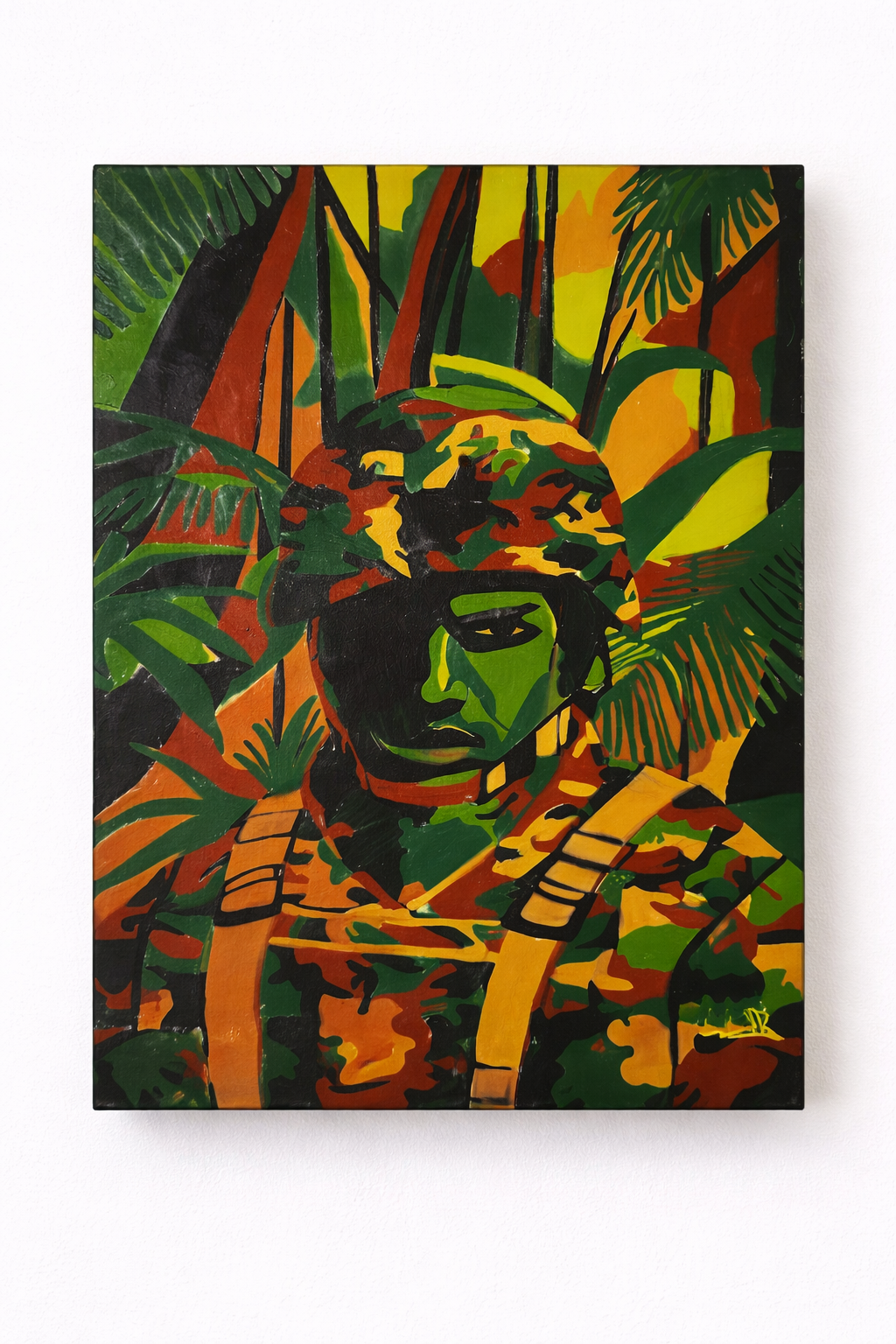
"Becoming Invisible" marks the beginning of A.LaB’s Invisible Man series, capturing a soldier at the moment his individuality begins to disappear into the environment around him. The camouflage seems to almost accidentally form the figure, while the more clearly defined weapon creates an uneasy contrast between the person and the function he has been asked to perform. The piece asks viewers to consider how easily a soldier can become an abstraction of conflict, while the individual beneath the uniform, with a life, relationships, and identity of his own, becomes increasingly difficult to see.
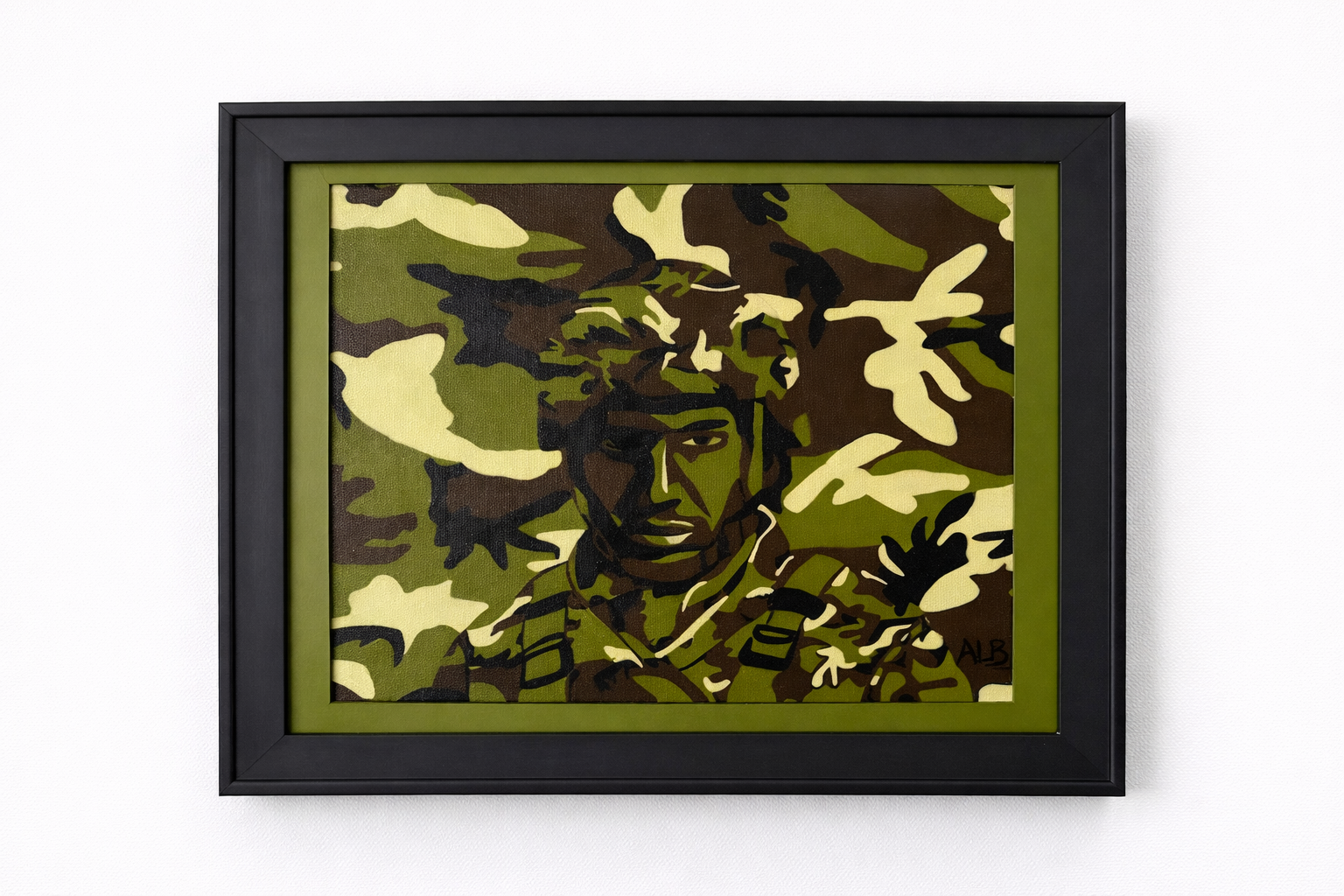
"Second Nature" pushes camouflage beyond concealment, allowing the soldier himself to nearly dissolve into the pattern surrounding him. His face remains just recognizable enough to meet the viewer’s gaze, creating tension between seeing the uniform and recognizing the individual within it. The piece explores how military identity can become so ingrained that the person and the role begin to blur together, while also asking how easily service members can be reduced to symbols rather than seen as individuals. By making the soldier visually disappear into his surroundings, A.LaB invites viewers to look more closely at the humanity that remains beneath what has become second nature.
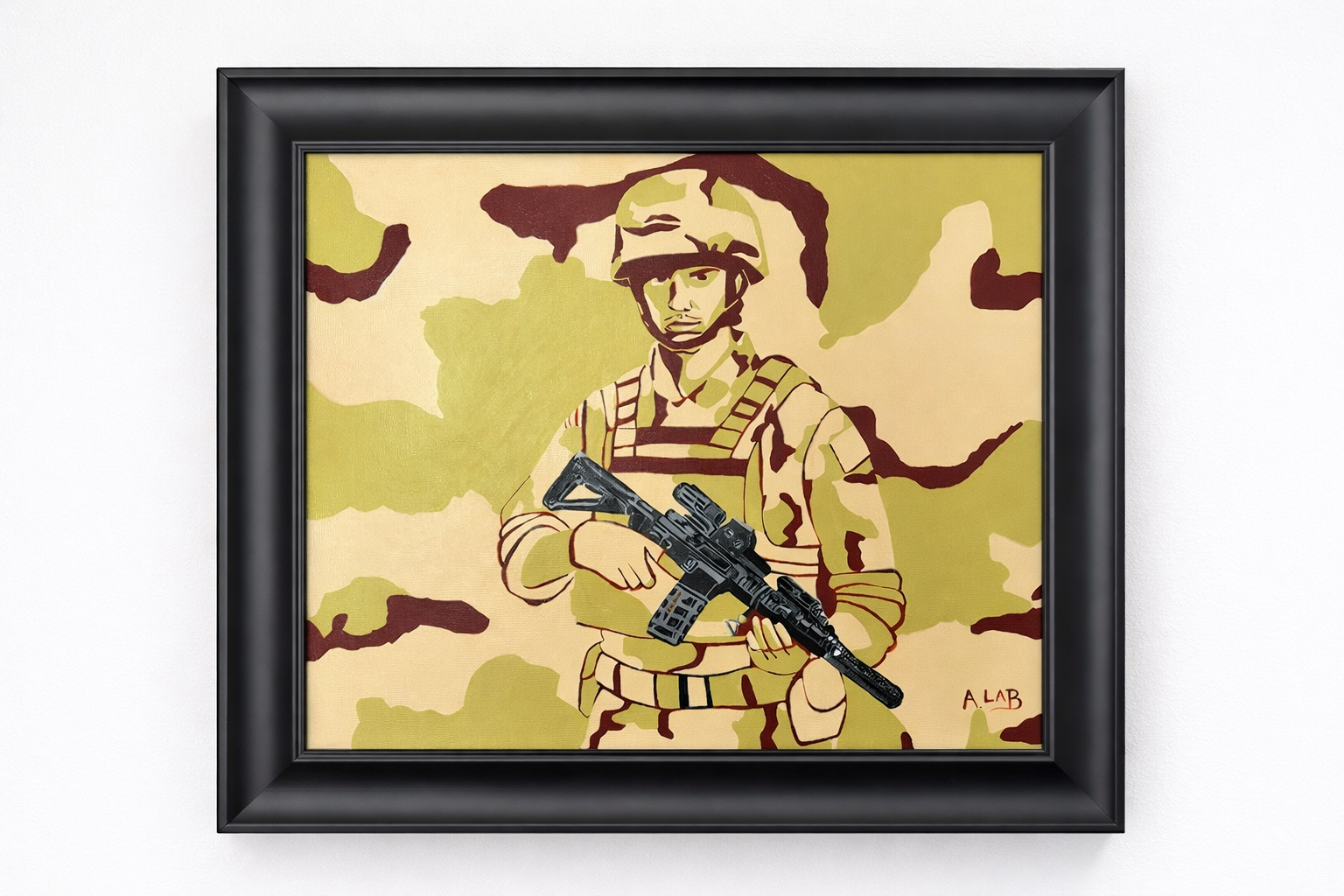
"Invisible Man" places a soldier against a desert camouflage pattern that nearly absorbs his body into the background, while his weapon remains sharply defined in dark contrast. The visual imbalance is intentional, reflecting how easily service members can become identified by the tools and roles of war while their individuality fades from view. As the central work in the "Invisible Man" series, the painting asks viewers to look past the uniform, the weapon, and the symbolism of conflict to recognize the human being who is still there, even when he has become difficult to see.
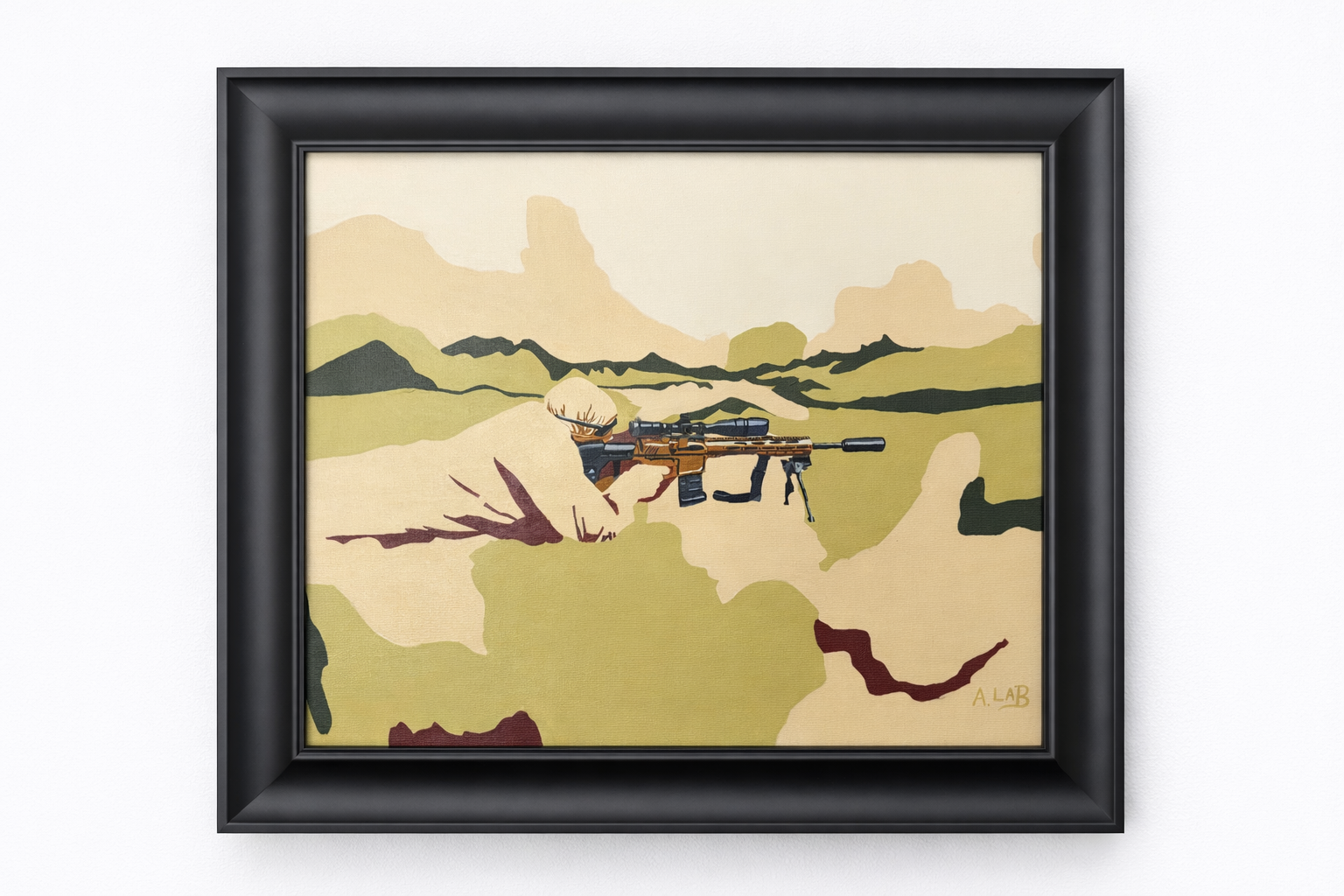
"Function Over Form" reduces the soldier almost entirely to the role he has been trained to perform. Blending into the desert landscape, his body becomes difficult to distinguish from the terrain while the rifle remains sharply defined, drawing the viewer’s attention to function before identity. The piece reflects on how easily service members can be reduced to their usefulness within conflict, while the person behind that function fades from view. As part of the "Invisible Man" series, it asks what is lost when we recognize the weapon, the uniform, and the mission before we recognize the human being.
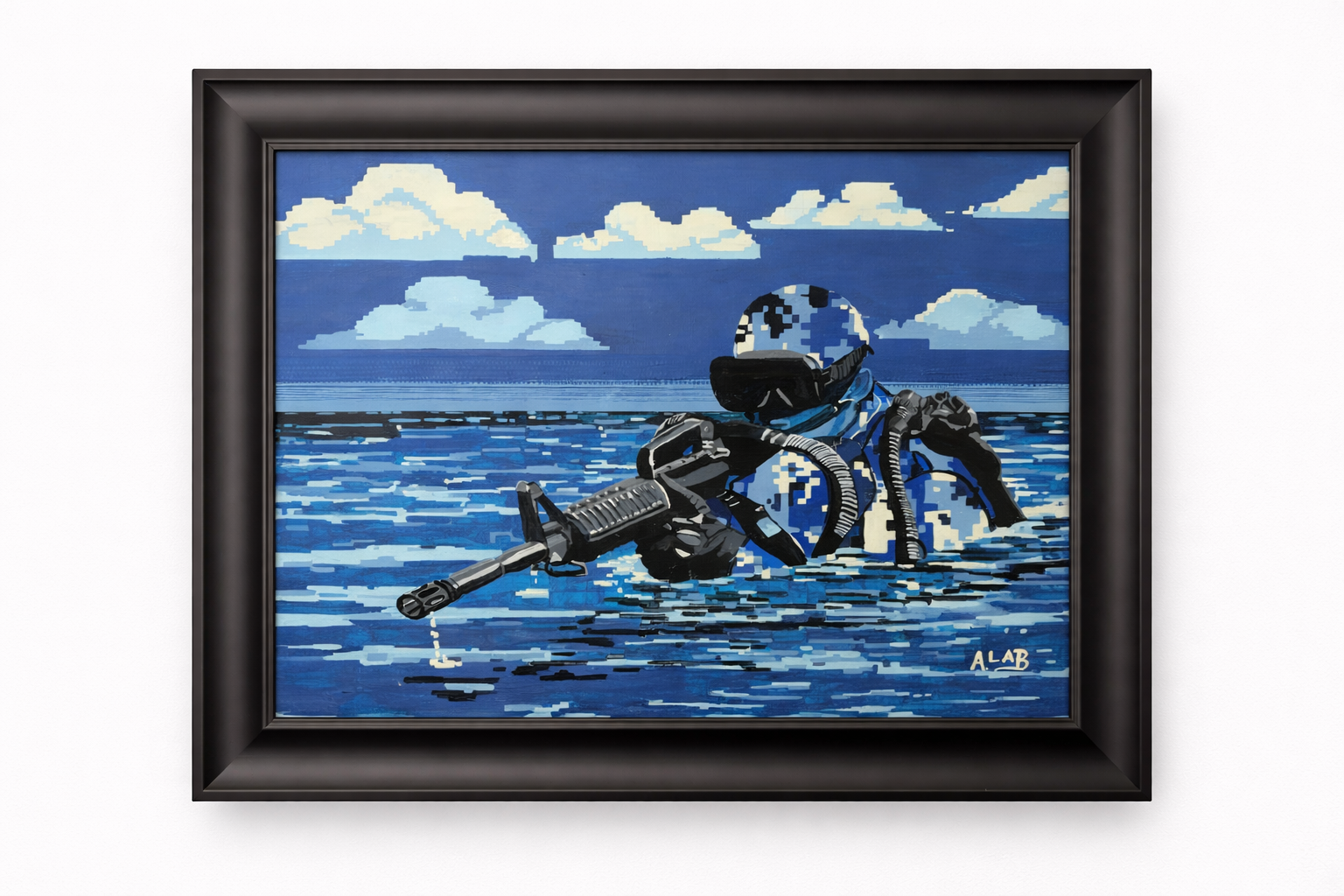
"Rendered" places a lone soldier partially submerged in an expanse of blue, his body nearly disappearing into the water and sky around him. The restricted palette causes the figure, equipment, and environment to merge into one visual language, blurring the boundary between the individual and the role he has been asked to inhabit. As part of the "Invisible Man" series, the piece reflects on how easily service members can become symbols, statistics, or distant figures within conflict while their humanity fades from view. "Rendered" asks the viewer to look beyond the uniform and recognize the person who remains, even when he has become difficult to see.